
Crowns, Bridges, & Veneers
Crowns
A dental crown is a cap that covers a tooth above the gum line. Crowns strengthen teeth that are too damaged or decayed for a filling. Crowns are also used to anchor a bridge to the surrounding teeth, or to attach to a dental implant. A crown can also be used for cosmetic purposes if a patient wishes to cover a misshapen or discolored tooth.
Although preparing a tooth for a crown requires shaving down an existing tooth, a crown protects weak teeth and gives your tooth a longer life. Our office uses four types of crowns:
- Metal crowns are the most durable, and we use them on the back teeth because they get the most wear and tear. These crowns are not the most aesthetic choice, so they aren’t a good option for front teeth.
- A crown that is porcelain-fused-to-metal (PFM) has a metal interior for strength and a porcelain exterior for a more natural appearance. These are strong and aesthetically pleasing, making them a good option for all teeth.
- An all-porcelain crown is the most aesthetic and closely resembles your natural teeth. It is a good choice for front teeth that don’t get as much wear and tear.
- All-zirconia crowns represent the strongest ceramic crowns. These crowns are a good alternative to PFM or metal crowns when strength is necessary.
Bridges
A bridge literally bridges the gap created by missing teeth. A bridge can replace one or more teeth and restore your smile and ability to chew and talk properly. It also maintains the shape of your mouth and prevents your remaining teeth from shifting out of place. A bridge is fabricated by preparing teeth for crowns on either side of the space. These teeth become supports for the crowns between them. The bridge is cemented into place and cannot be removed.
Veneers
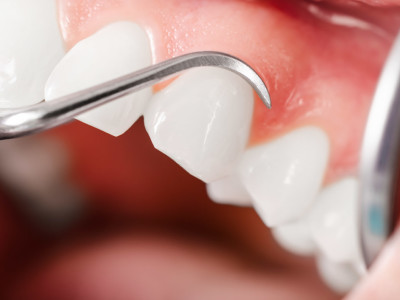 Veneers are typically cosmetic choices for your teeth. If you are unhappy with the size, shape, color, alignment, or spacing of one or more of your teeth, a veneer may be a good option for you. Dr. Strandburg shaves down a thin layer of your tooth and replaces it with strong, natural-looking porcelain. Because veneers are mainly cosmetic, they are typically only used on the front teeth.
Veneers have some limitations. If you have significantly misaligned teeth or a large gap, orthodontics may be appropriate. If you have significant loss of tooth structure from decay or trauma, then porcelain crowns that cover the entire tooth might be a better restoration.
Crown, Bridge, & Veneer Procedure
- Use local anesthetics to numb the area
- Prepare the tooth for restoration with the use of a dental drill
- If necessary, place build-up material to support a bridge or crown
- Make impressions of your teeth using a putty-like material and send them to the dental laboratory
- Attach a temporary crown to your tooth to protect it until your permanent crown is ready
- Attach the new crown, bridge, or veneer with permanent cement about two weeks later